Multi-day tour operations without the spreadsheet maze
Multi-day tours mean guide handoffs, overnight logistics, and itineraries that span days or weeks. Helm keeps every leg coordinated so nothing unravels on day three.
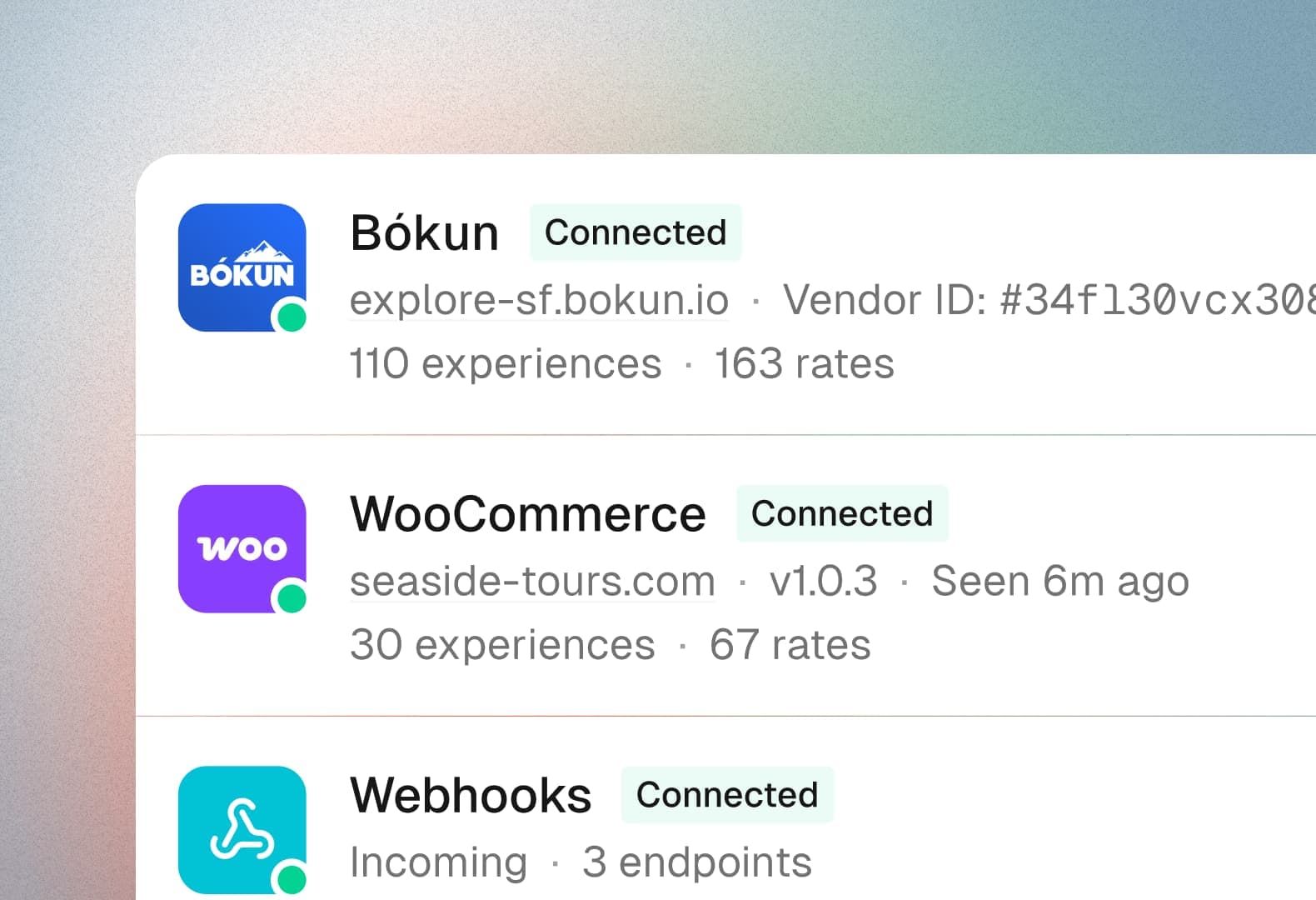
Helm is tour operations software — scheduling, OTA sync, and team coordination in one platform.
$182B
global multi-day tour market value
Statista, 2024
67%
of multi-day operators use spreadsheets for itinerary management
3-7
average days per multi-day tour itinerary
Multi-day scheduling
See an entire tour itinerary across days in one view. Each day shows its guide assignments, activities, and logistics so nothing gets lost between legs.
Guide handoff management
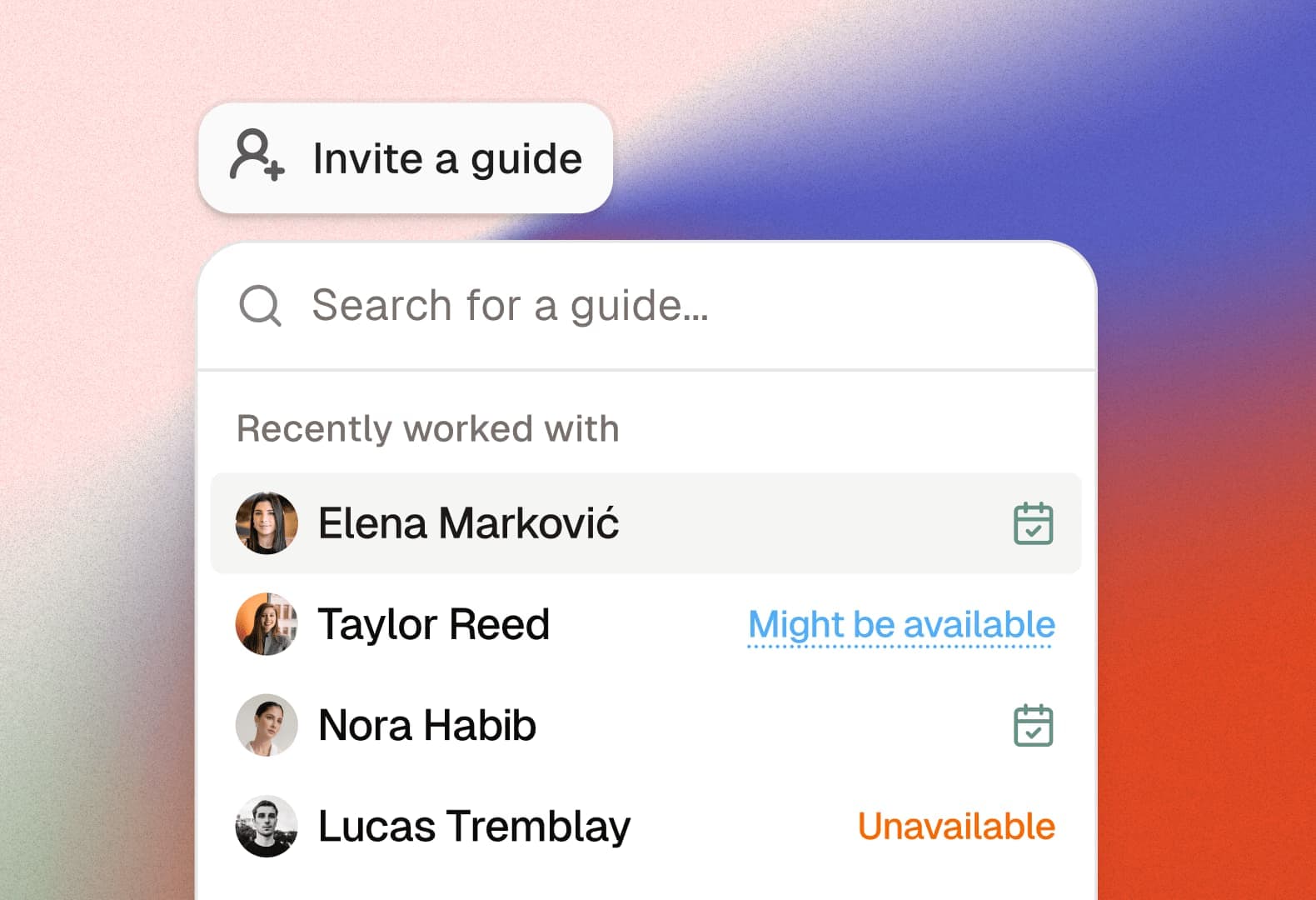
When different guides cover different days or legs, Helm makes the transitions visible. Each guide knows exactly when they're on, what they're covering, and who takes over.
Itinerary-wide visibility
One change on day 2 can cascade through the rest of the trip. Helm shows the full itinerary so you can anticipate downstream impacts before they become problems.
Common challenges
- Multi-day scheduling complexity with guide handoffs between legs
- Cascading changes — one disruption affects all subsequent days
- Coordinating accommodation, transport, and activity providers across days
- Guide availability spanning multiple consecutive days, limiting their other assignments
- Client communication across a multi-day experience with evolving logistics
How Helm helps
- Calendar views spanning multiple days showing all assignments per tour
- Change management workflow that surfaces downstream scheduling impacts
- Detailed notes per day and leg for vendor coordination and logistics
- Multi-day guide availability tracking preventing conflicting assignments
- Centralized tour details that keep all assigned guides informed across the itinerary
Why multi-day tours are operationally in a league of their own
A single-day tour is a discrete scheduling unit: one guide, one departure, one return. A multi-day tour is a chain of interdependent events spanning days or weeks, where each link depends on the ones before it. Guide A covers days 1-3 in Lisbon, Guide B picks up for days 4-5 in the Algarve, and a driver handles transfers between legs. If Guide A falls sick on day 2, the entire chain is at risk.
Most multi-day operators manage this complexity in sprawling spreadsheets that become unreadable beyond 5 active tours. The itinerary lives in one tab, guide assignments in another, vendor contacts in a third. When a hotel changes a check-in time, someone has to manually trace the impact through every connected element. It's slow, error-prone, and unsustainable.
Helm treats each day of the itinerary as a connected but independently schedulable unit. Every day has its own assignments, notes, and logistics — yet they're linked, so you know when assigning Guide A to a 5-day tour that they're blocked for those dates. If a change occurs on day 2, you can see what's scheduled for days 3-7 and adjust before the cascade hits.
For multi-day tour operators, operational visibility isn't a nice-to-have — it's the difference between a smooth journey and a logistical nightmare that damages your reputation and your margins. Helm gives you that visibility across every leg, every guide, and every day.
Stop managing your tours from a spreadsheet and a group chat—there's a better way.






Helm replaces the patchwork of tools tour operators rely on with one purpose-built platform for everything that happens after a booking.
Try Helm for free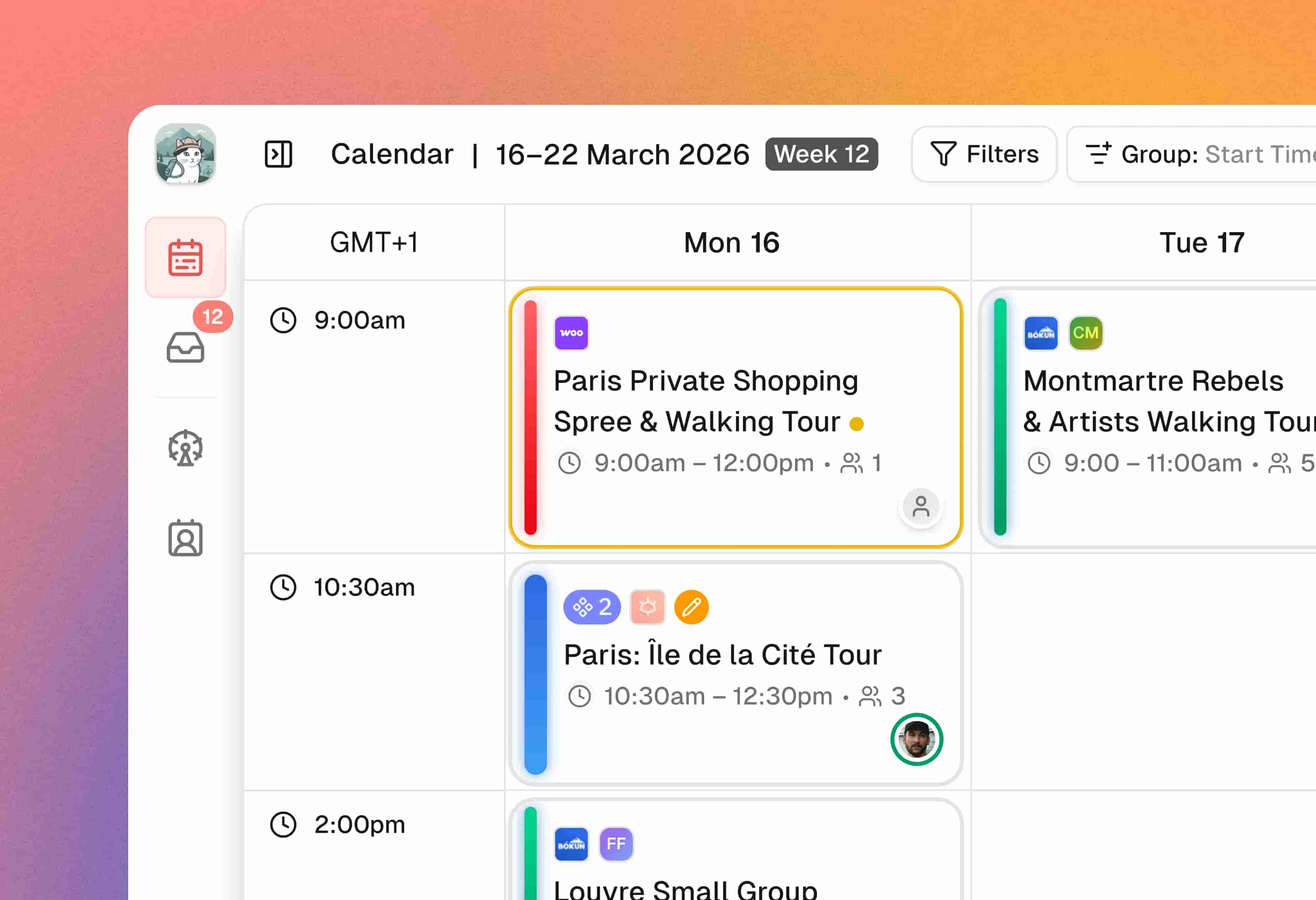
Frequently asked questions
Related pages
Ready to replace the patchwork?
Start for free with 2 team seats. No credit card required.